
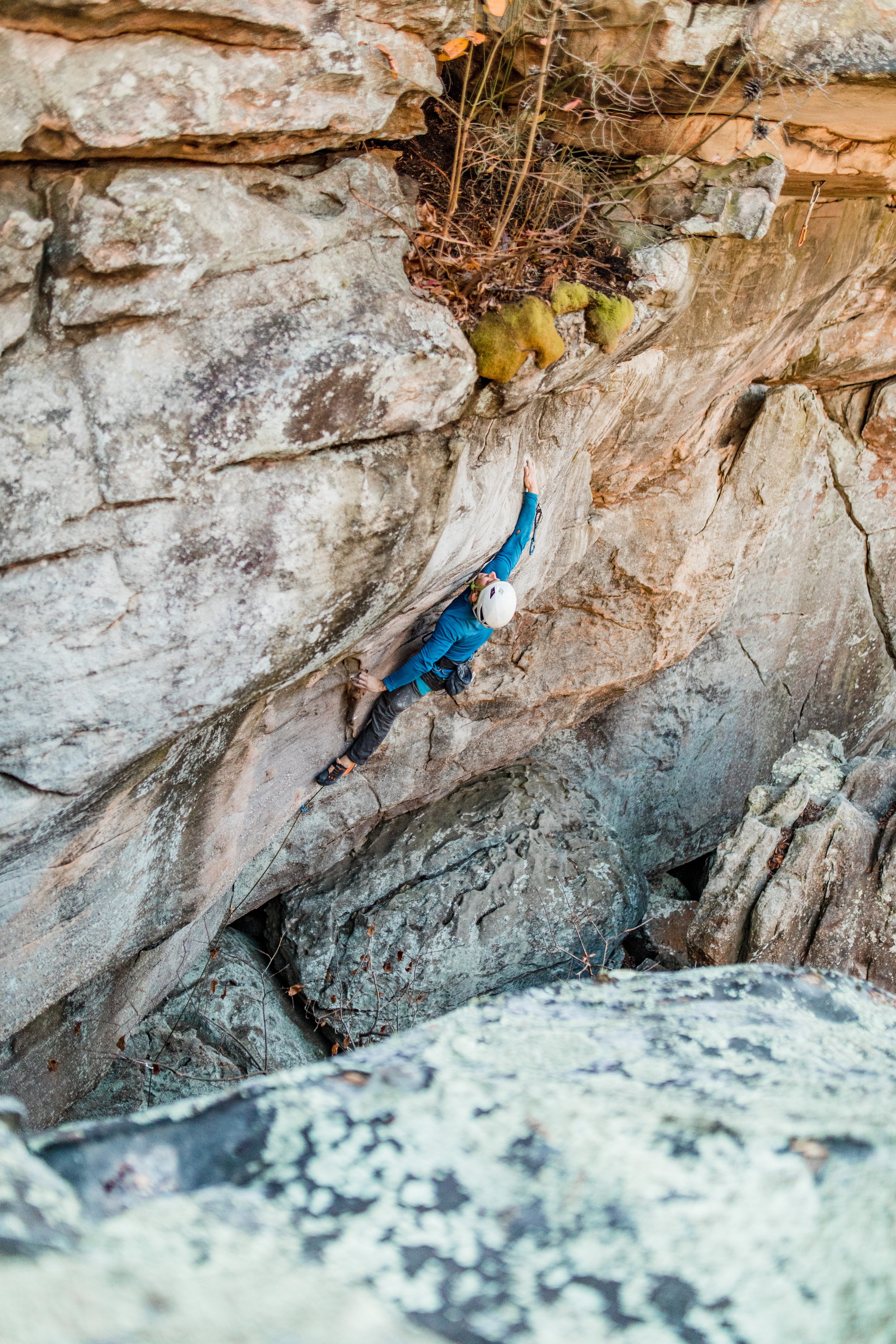
Sending a multi-year project of mine in Sand Rock, Alabama.
“Silence Between the Violence” (13d)
Your first go on a project isn't about climbing. Not really.
I know that sounds wrong. You drove an hour to the crag, you've been psyched on this route for weeks, and now I'm telling you the first try doesn't count as climbing? Hear me out.
The intention of your first go — and your entire first session, really — should be exploration and learning. No expectations of performance. One question ought drive every decision: how do I access as much information about this climb as possible, while spending as little energy as possible?
Before You Pull On: Do Your Homework
This is optional, and it depends on the experience you want. But if you're fine not expediting the process and negating a bit of purity, there’s a a lot of ways to stack the deck in your favor.
Watch videos, of course, but the real gems are often in the comments on 8a.nu, Mountain Project, or other online databases — not the "sent it, great/soft/whatever" fluff, but the actual notes from people who've spent sessions on it. The only people writing detailed beta are people who've genuinely invested in the thing, and they'll often tell you exactly how they grabbed a hold, used a kneescum, or found morpho/non-morpho beta.
And if that’s not the experience you want, opt out. It’s just one form of tactics, and a way to show up informed.
First Go Logistics - “How To”
Remember, the goal is collecting information. Touch every hold. Feel every position. Obviously chalk marks the most trafficked holds, but look for the polished, perhaps black, spots as well. These are the most trafficked feet. Imagine every sequence, and don’t bother trying to do them all yet. You want the highest information-to-energy-spent ratio as possible.
For sport routes, embrace a bit of an aid-climbing approach if you need to. Grab every draw. Clip in direct at bolts, and while there, touch (and brush) every hold. If a section is too hard to figure out quickly, pull through on the rope, and if the bolts are too spaced for it, then step up in a sling to reach the next bolt, try a rodeo clip (steep routes only), or even lower a bight of rope to pull up a stick clip (stay on two points if doing this).
For boulders, accessing the information is usually easier. But, you do need to get to the holds, and that might mean stacking pads to reach the top section, bringing a ladder, or even rigging a short rope so you can rap down and feel the holds, try moves, and rehearse topping out.
Once you can reach everything, start with what seem to be the easiest positions. Hold those. Then progress to harder positions. Then try what you think are the easiest moves, and progress to the harder ones.
Being Conservative
When you find a move you can’t do right away, be aware of the toll it’s taking. Don't wreck your skin, or go to the death. With experience, you’ll gain the ability (and confidence) to know just from a try or two (or even none) whether the move is possible for you.
“You’re happy with that?”
This winter I was climbing at Laurel Falls with some friends — including a couple of athletes I’m still coaching — and I got on a project a friend had recently bolted. Supposedly, it was going to be “low end 5.14”. Hard enough that there was no point in me trying it onsight, and I had other objectives for the week that I’d need good skin for.
So I stick-clipped the first bolt, went up, and grabbed every draw on the route. At each hard section, I'd try the move a couple of times. If there was a rest, I’d play with it for just a few seconds, and then take. One section in particular was incredibly blank, and I tried a few different methods before pulling past it.
When I came down, my belayer, Nathan, looked at me and said something along the lines of, "You barely climbed! You’re happy with that go?”
I told him I was. I felt like I could nearly do the route next try if I found a way through that crux section.
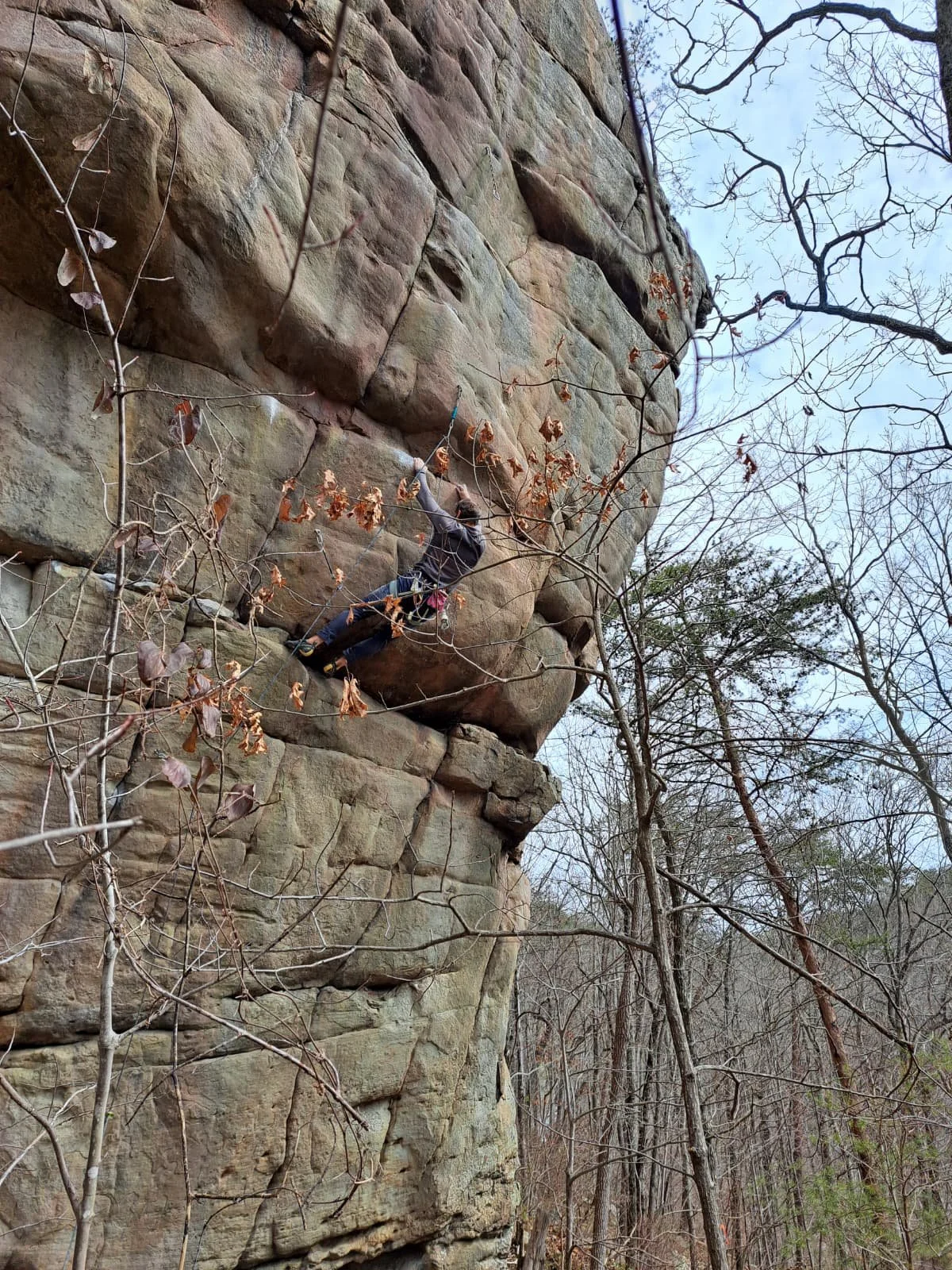
Tyson below the crux of The Jackal (13d) on a perfect winter day
An hour later, I tied back in and linked the whole route to the crux - messed around to find the best method for it - and then linked from just after the crux to the top. I had gone from, say, an “8 hang” to nearly doing the route in 2 parts. I decided to finish the day with a lap on my first 13d from years ago - The Jackal - and then we hiked out as it got dark.
The point here is, first goes can appear underwhelming, but when done well, they expedite the subsequent goes and sessions drastically.
Your Second Go in the First Session
You probably have more than one go in you, unless you’re splitting your day with other routes, crags, boulders, etc.
If you didn't go to anchors on your first try: That’s ok. Come down, rest, and on your second go, pull quickly through the sections you already tried your first time - seriously, do no moves, aid climb, whatever - and focus exclusively on the untouched sections.
If you did go to anchors your first try: Now you’re in for a short bouldering session. On this go, don't repeat the moves you already did. Go right to the ones you skipped or felt hardest, and ignore the rest.
Timing
If this is a project you’ve dreamed about for weeks, months, or more - it deserves respect. Does that mean you should show up fresh, rested, and with the route as your day’s priority? Or is it ok to do this recon when you’re tired, late in the day, or several days on?
It depends.
If you are really dialed in your ability to climb up a route pulling on draws, simply acquiring information, and attaching no weight to “how little moves you do”, then it’s reasonable for you to do this almost anytime.
Most of us are not dialed in this ability. So for most of us, it’s more important to truly prioritize this recon. We want to feel strong, capable, and avoid risk of injury. That means showing up rested, warmed up, and open minded.
A Note on Boulder Projects Specifically
Bouldering differs in a big psychological way from route climbing. On a route, even when you're working at or beyond your limit, you're still doing most of the moves. On a boulder, you might spend an entire session not doing a move. So for routes, the doubt comes later on, when you realize the difficulty of linking everything. On boulders, the doubt is immediate, and fades over time as we learn the subtleties and recruit specifically to the style, holds, and so on.
And remember, you tend to run out of skin long before you run out of time or energy. Don’t put yourself in this trap.
The Short Version
Your first go on a project is about learning. Go in with without expectations. Touch every hold. Imagine each move.
Perhaps most importantly, SAVOR it. You only get to try it for the first time once.
If you're working toward a specific project and want help building a plan around it — training, tactics, trip preparation — I would love to help. Book a free 20-minute consult and let's talk about your goal.
