
Good Tactics → Better Questions
I’ve been told I have good tactics. Really, tactics are another term for “problem solving”, and it’s a skill that I’ve found great joy in developing ever since I started climbing.
I think most people hear the phrase “problem solving”, and assume the hard part is the “solving”. However, when people tell me I have good tactics, it’s not usually because I have a particularly innovative solution. More often than not, it’s because I’m addressing a problem they didn’t realize was really a problem.
Let’s give some examples.
Throughout college, which was years 2-5 of my climbing life, I was mostly a weekend + holiday warrior. I was concerned with seeing and sending as much as I could. That meant I didn’t return to the same crag, or even discipline, multiple weekends in a row. One weekend I’d go to Chattanooga, another Alabama, and North Carolina the next. That meant there was a lot of “pressure” to not go home empty handed (without sending something).
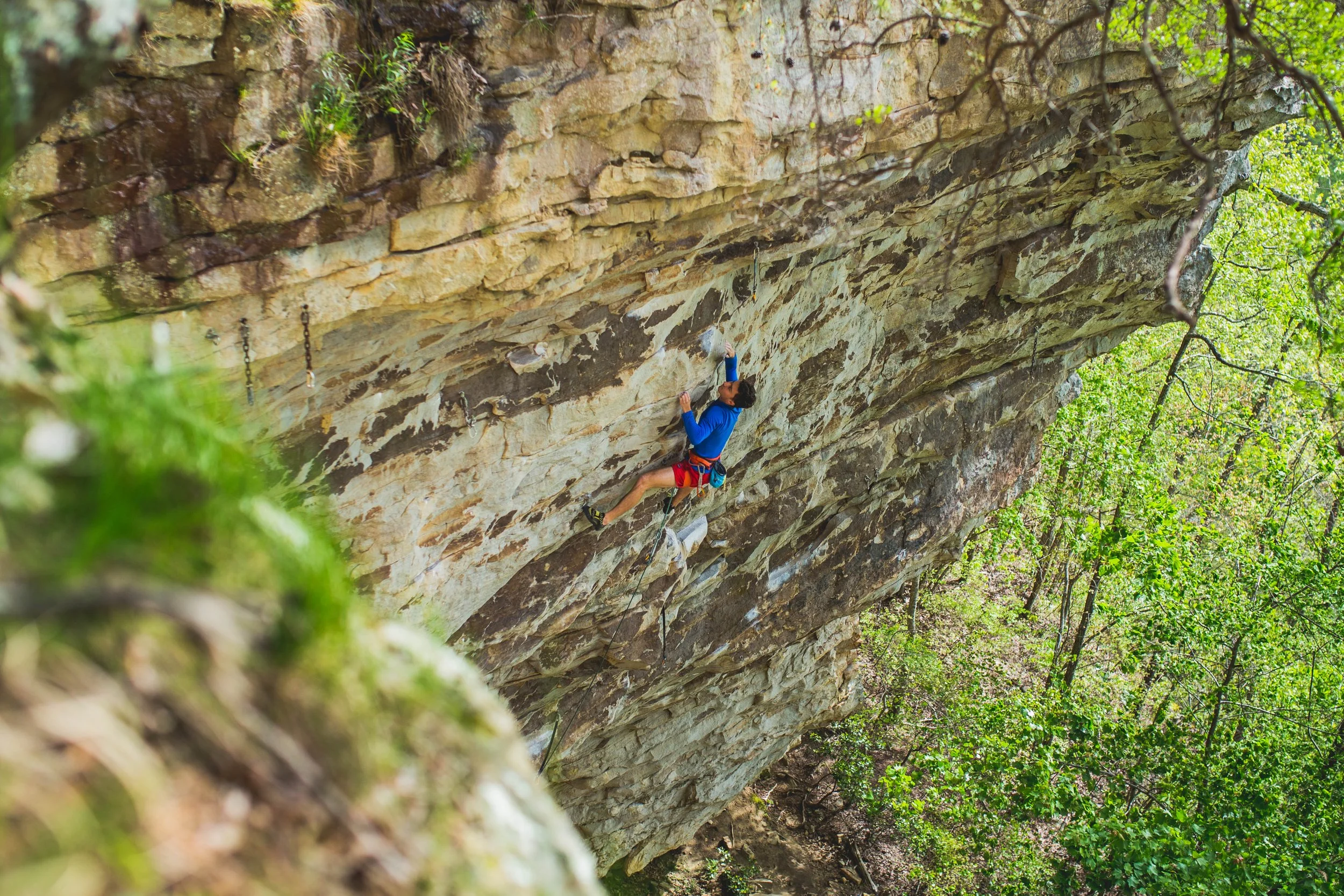
One of my biggest projects from those college years - Unshackled (13b) at Little River Canyon
Photo: Caleb Timmerman
I became rather skilled at the art of sending 2nd try. I was sending routes quite near my redpoint limit in just 2 tries, and not because I was underperforming my redpoint limit, but because I was tactical in how I approached 2nd go efforts.
What did I do?
I didn’t try to onsight or flash. The first go was entirely devoted to teeing up the second go. I had a patient belayer, and I would take at every bolt. I’d climb the easy sections multiple times. The hard sections I would rehearse between decently long breaks. I grabbed draws and clipped up the whole route if needed, but I would always envision how to clip or which bolts to skip. I practiced the rests as much as I did the moves. If I could extend a draw so that it could be clipped from a rest, then I’d do that. I’d make a note of which side of my body got more tired after doing the crux, and prioritize resting that side more when I try for the send. More than any of that, perhaps, was the commitment to trying different footholds, and committing the best ones to memory. I find most people commit to a hand sequence quickly, but could show up 5 more sessions and still be using a different foot sequence each time. Dialing in and remembering feet feels like the cheat code that really shouldn’t be a cheat code. It’s half the route, and people completely omit it from their memory.
Where this goes wrong:
It’s easy to overcook this. If you try to do everything at once on the first try, especially without resting on the rope sufficiently between pull-ons, you exhaust yourself (and belayer…). If you do too little, you miss that crucial detail that keeps you from succeeding. I find the best recipe to be erring on the side of a longer first try, but then also erring on the side of a longer rest period following. Maybe your partner is doing the same thing, and you both get an hour on route to try and figure it out.
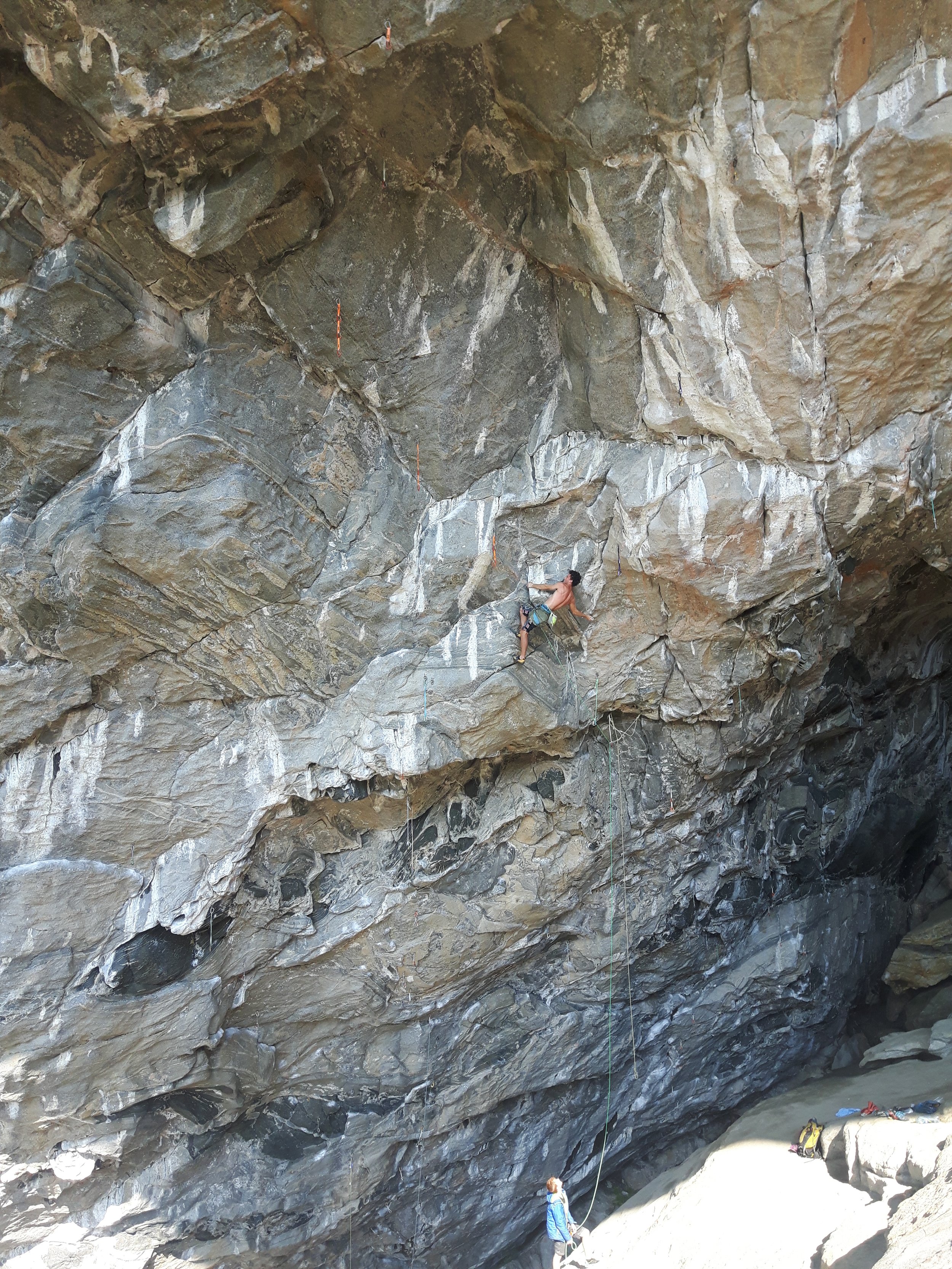
2018 trip to Flatanger, where I really expanded my understanding of projecting and tactics.
Another example is from a recent project. I had been working on a sport route here in Squamish called “Silent Menace” - a 14c just beside Dreamcatcher, which is only 4 bolts long. The route breaks down nicely into a V11/12 opening boulder on small holds, an ok rest, and then an outro V8/9 that is very board-like.
Again, the biggest “problem” I solved with this route was how to warmup and recruit specifically to it. The important part was preparing, not doing. How’d I do this?
Because the route was so short, and traversing in nature, I could reach all of the bolts with a stick clip. I would stick clip bolt two, have my belayer take until I could clip in direct to it, and then tie off my rope to that 2nd bolt. I backed it up on the first bolt, and then transferred myself onto a grigri from which I could work all of the moves in the first boulder.
At this point, my belayer could take me off belay, and continue their ground warmup, or in some cases, go have a few rips on their boulder project nearby. I’d spend the next 10 minutes brushing and ticking holds, pulling into each position and gently unweighting the rope, and eventually doing each of the moves one at a time between hangs. It was a way of warming up progressively and specifically to the demands of this route. Once I’d gotten to the point where I’d done each move in isolation, I’d ask my belayer to put me back on, lower me, and let me rest for 5 minutes.
Then I’d pull back on and be ready to pull at 100%, with no need to re-familiarize with positions nor hesitate to think about how the holds will feel. There’d be no question marks, and my body was fully recruited.
Such was my routine up to the day that I sent. Ten minutes recruiting specifically to the holds and moves, rest 5, and boom - hardest route sent.
My send of Silent Menace
The point I’m trying to make here is that tactics have a lot more to do with asking the right questions than having the right answers. To send something 2nd go, I wasn’t asking what I needed to do on that 2nd try, but I was asking “what’s everything I can do before that to make it feel as close to a refined project as possible?”. To send this more recent project, I wasn’t asking how to make the moves easier or how I could be stronger, I was asking “how can I be recruited as specifically as possible to these holds and moves before giving a try?”.
